
01 — FROM FIGMA TO PRODUCTION
I design and build websites, apps and AI tools in Astro, Next.js and Sanity.


Why custom
Sound familiar?
Your site holds you back.

TODAY · 01
Templates hold you back
A platform only does what it does. Every exception is a hack, a plugin or a compromise.
CUSTOM
No platform ceiling
Configurators, client portals, integrations. I build what the business needs, and the site grows without a rebuild.
TODAY · 02
Content can't be reused
Copy lives inside pages. For an app, a newsletter or another language, you write it again.
CUSTOM
Content as data
One edit in Sanity updates the website, the app and the AI assistant.
TODAY · 03
You pay for what you don't use
Licenses, plugins and third-party scripts. A slower site and higher running costs.
CUSTOM
Speed by default
The site loads instantly and costs less to run.
- Ondřej clicks a headline in the preview and edits it right there, no form hunting.
- Klára schedules Monday's 8 am campaign and goes home. The site switches itself.
- Tomáš updates a price once and it changes on the site, in the app and in quotes.
- Martin lets AI draft alt texts for 200 photos and just approves them.
- Petra adds a German version and the site links it to the Czech one.
The solution
A website built around your business.
With room to grow.
I shape the solution around how your business works, from a company website to an application connected to your existing systems. We can add pages, languages or features over time as your needs change.

Why Sanity
You manage the content.
Not a developer.
Sanity is a content system that adapts to your team. Content lives in it as data, so you can use it on the website, in an app and in AI.
01
Edit directly on the site
Click any text or image in the preview and Sanity takes you straight to where it's edited. You see the result instantly, before it goes live.

02
Languages and channels, no copying
One text in several languages and channels. No copied pages, no versions drifting apart.

03
Schedule releases ahead
Bundle several changes into one release, review them and publish at a set time.

04
AI that knows your content
Translations, alt text and bulk edits from a single prompt. AI handles the routine, you approve the changes.

05
Ready for what comes next
Your site can grow with new pages and features. We agree on the scope and price of any further work in advance.

80+
Projects delivered
11+
Years of experience
100
Lighthouse score target
Process
Four steps
from first message to launch.

I learn your business
A message, a call, goals, audience and competitors. That becomes a clear plan, scope and budget.

Design before code
A Figma design: structure, content and visuals. Code starts only after you approve.

Build and launch
Development, Sanity Studio, speed and accessibility testing. I'll show you how to manage the site.

Still here after launch
New pages, features, campaigns. The site grows with you, no agency queue.


Designed, not generated.
Services
What I can do for you.
From design to website care.


I turn an approved design into a fast, reliable website and connect it to your CMS, forms and the tools you already use.
- Development to the approved design
- CMS and content management
- Forms and the integrations you need
- Testing and launch
I design a website, e-shop or app that looks good, is easy to use and helps people take the next step.
- User journeys and content structure
- Designs for desktop and mobile
- Clickable prototype in Figma
- Components and handoff for development
I tune your SEO: the site's structure, content and technical foundations, so the right people find your services in search.
- Structure and technical audit
- Content and metadata fixes
- Structured data and indexing
- Measuring and evaluating changes
I prepare your content so AI understands it and can use it in its answers.
- Content review from an AI point of view
- Clear answers and verifiable facts
- Structured, easy-to-follow content
- AI crawler access check
I move your site to a better-suited system and keep the content, key URLs and connections intact.
- Content and image transfer
- Key URLs kept and redirected
- Forms and integrations checked
- Testing and switch-over checks
From content edits to new pages and features. We can agree on ongoing care or one-off changes, always with the scope and price agreed in advance.
- Ongoing content and design updates
- New pages and features
- Speed and functionality checks
- Request overview and a plan for next steps
WORK
Selected projects.
Web, motion, CMS.
- Webflow
- GSAP
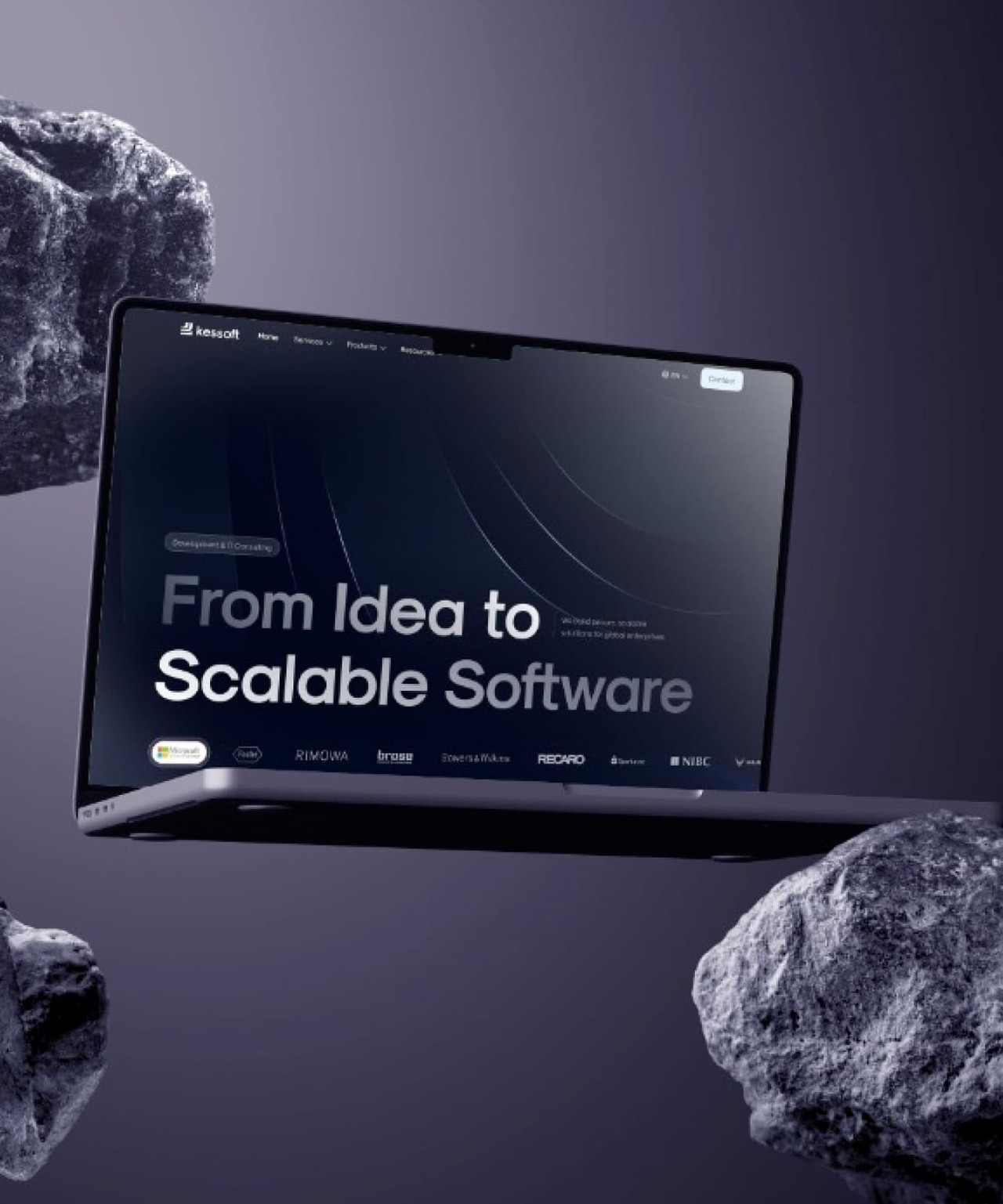
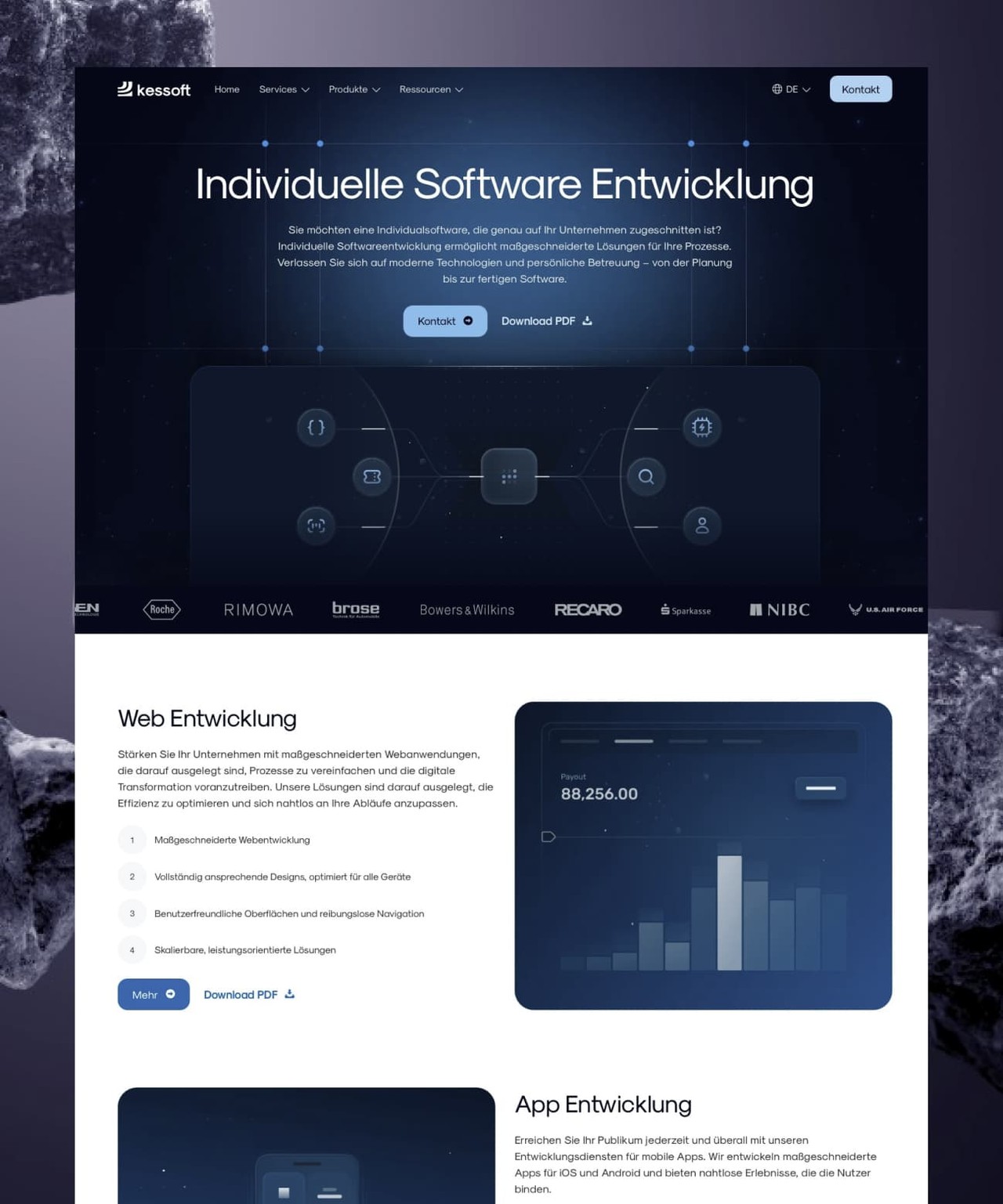
Custom Webflow build for German software company. The site is designed for high scalability, security and performance, with its own CMS and optimization for various forms of content. The output supports modularity, clarity and readiness for further expansion. Ideal for a company with a large clientele and a need for stability.
Kessoft
Webflow development for a software company focused on app development and digital transformation
- Webflow
- GSAP
- Motion Design
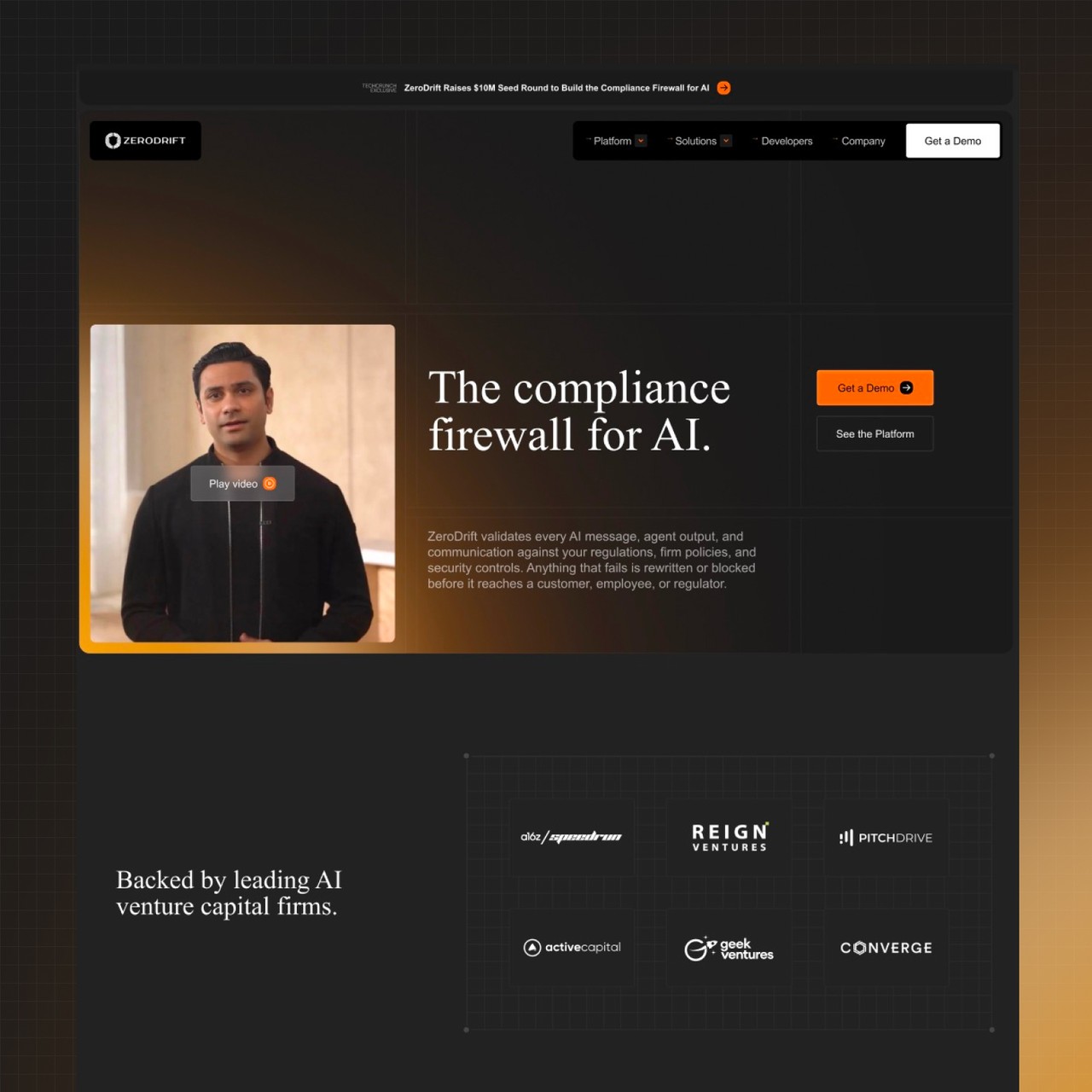
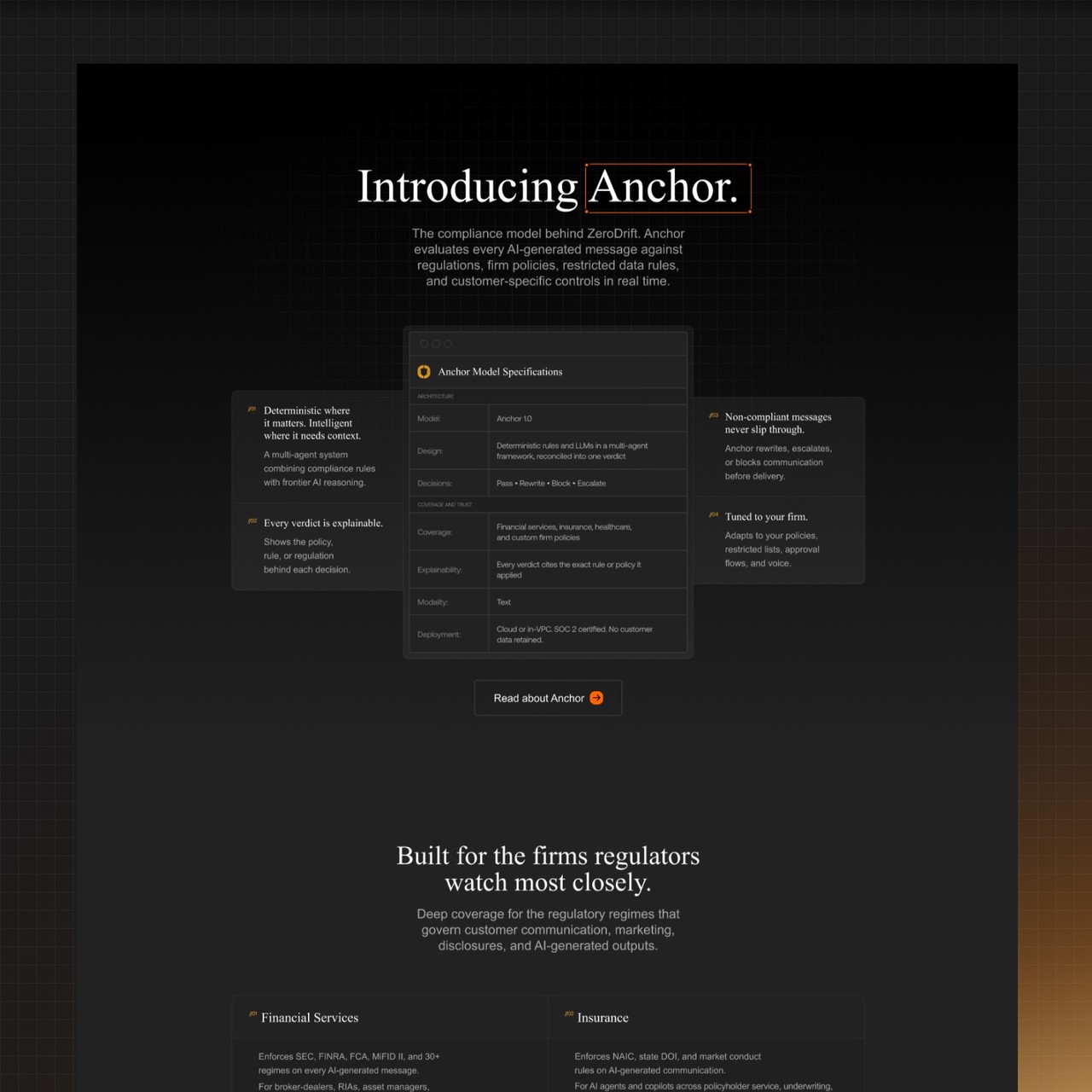
Webflow development for ZeroDrift, a US-based AI compliance startup after a $10M seed round. The platform validates every AI message, agent output, and communication against company regulations and security controls. A dark UI system with orange accents, a product-first layout, and motion that supports the brand’s enterprise character.
ZeroDrift
/w Made by Soulmates & Tonik
Webflow development for an AI compliance startup building a firewall for validating AI outputs against regulations and security policies.
Challenge
An enterprise B2B startup in the sensitive AI compliance category. The website has to convince CTOs and security teams at large companies that this tool belongs in their stack. At the same time, the company has raised a $10M seed round, and the website needs to reflect that without looking like another generic SaaS.
Solution
A Webflow build with a dark UI system and orange accents that hold attention without creating noise. A product-first approach where product demos, use cases, and technical credibility come first. Subtle motion supports reading instead of breaking it.
Result
A website for an AI compliance startup that looks like an enterprise tool while reading like a modern product page. Exactly what a sensitive B2B sales cycle needs.
- WEBFLOW
- GSAP
- Motion Design
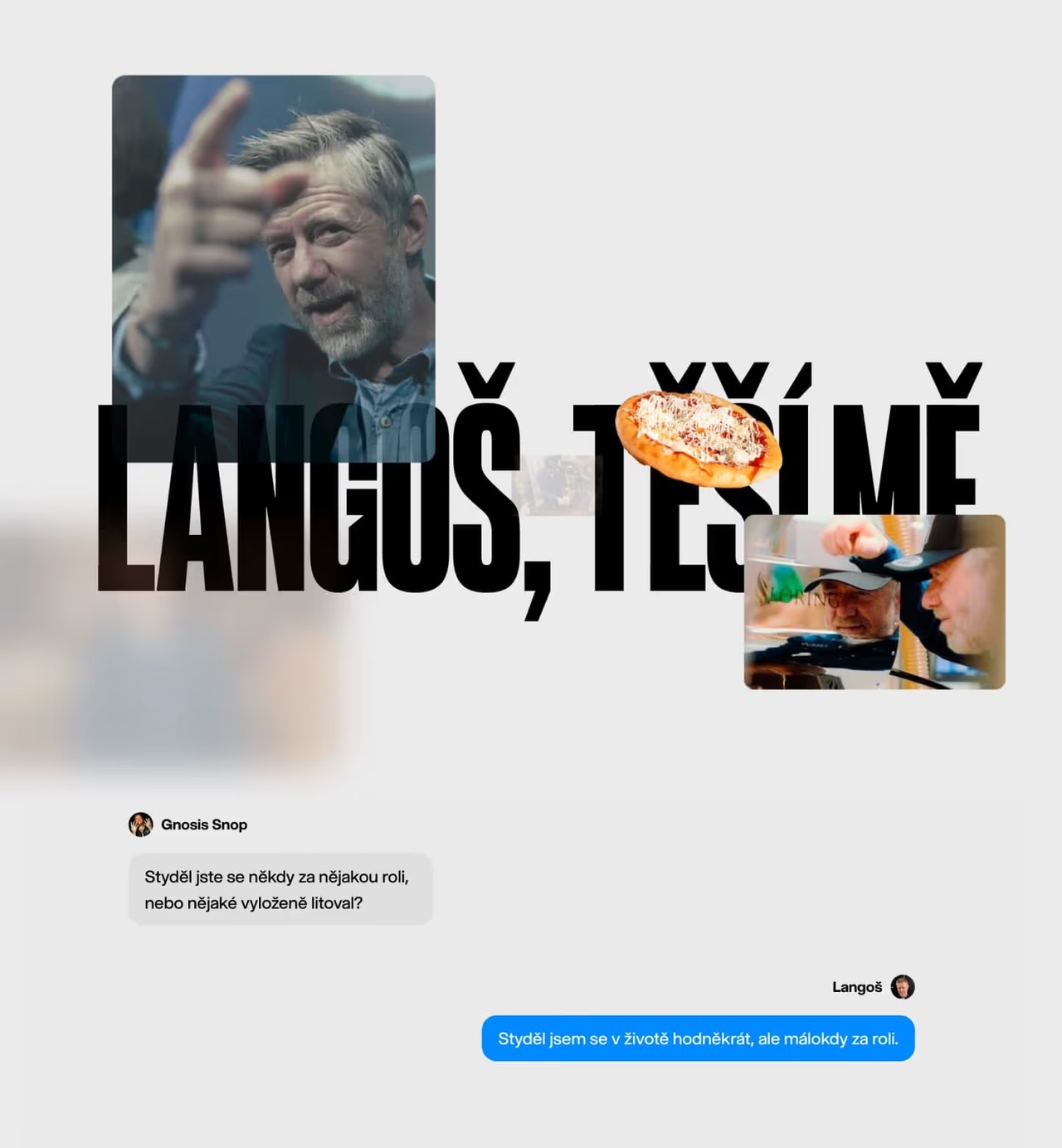
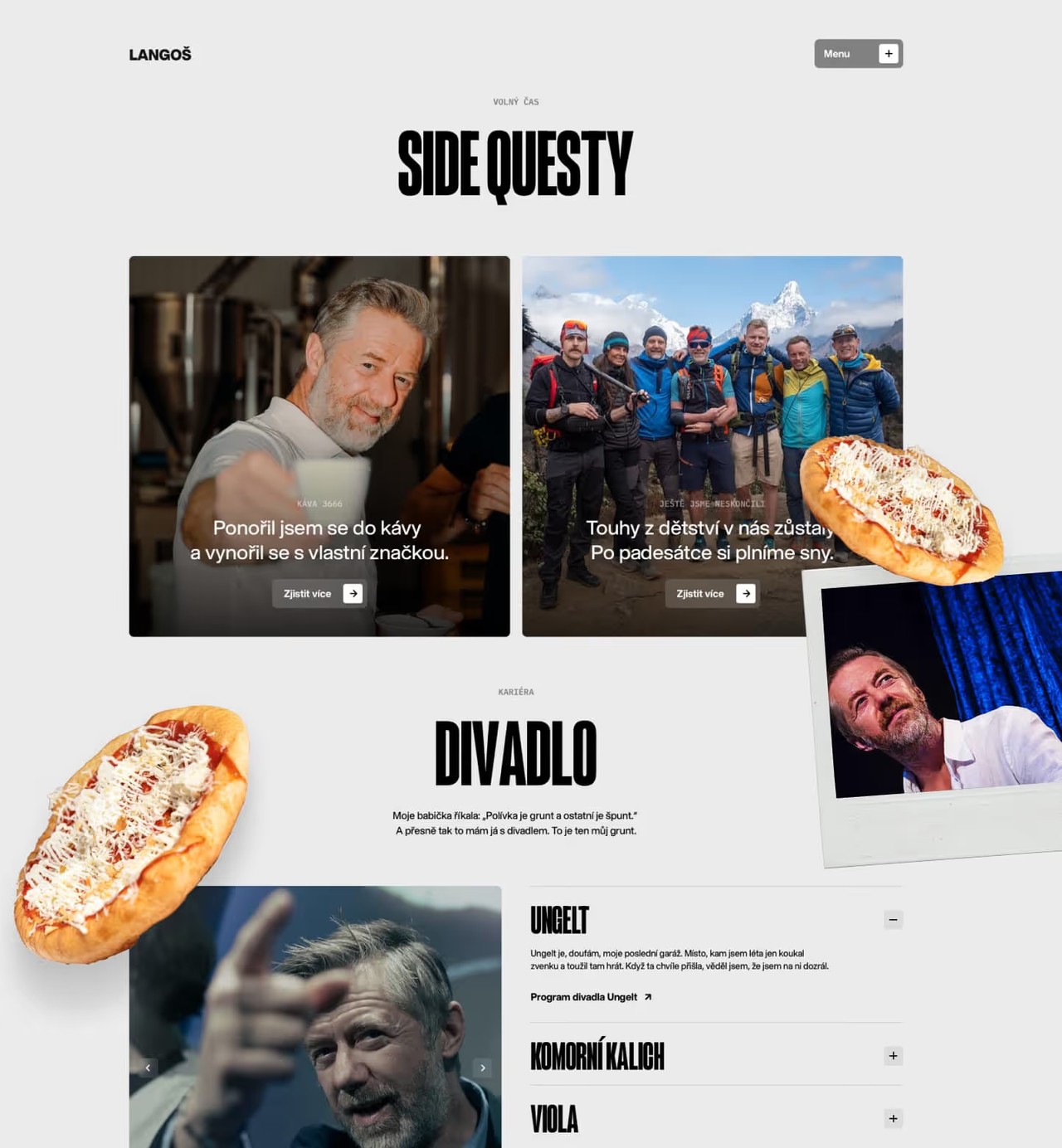
Webflow website for Jiří Langmajer — a well-known Czech actor and adventurer. The site uses advanced GSAP animations and smooth transitions to create a distinctive, interactive impression inspired by his personality. The website is built on Webflow CMS and combines distinctive visuals with precise motion design. Design: Yiskra.
Jiří Langmajer
/w Yiskra
Webflow development of a website for renowned Czech actor and adventurer Jiří Langmajer
- WEBFLOW
- GSAP
- Motion Design
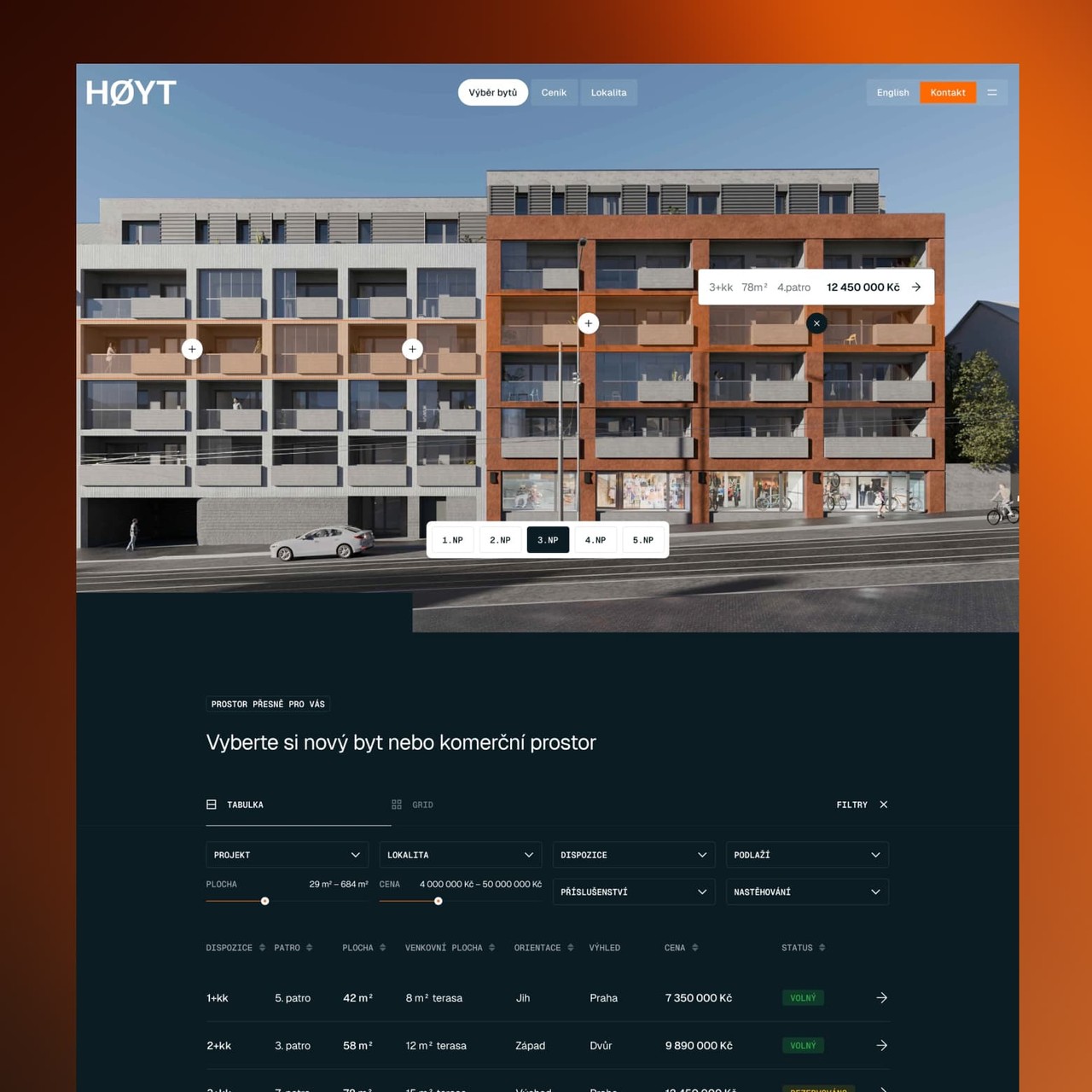
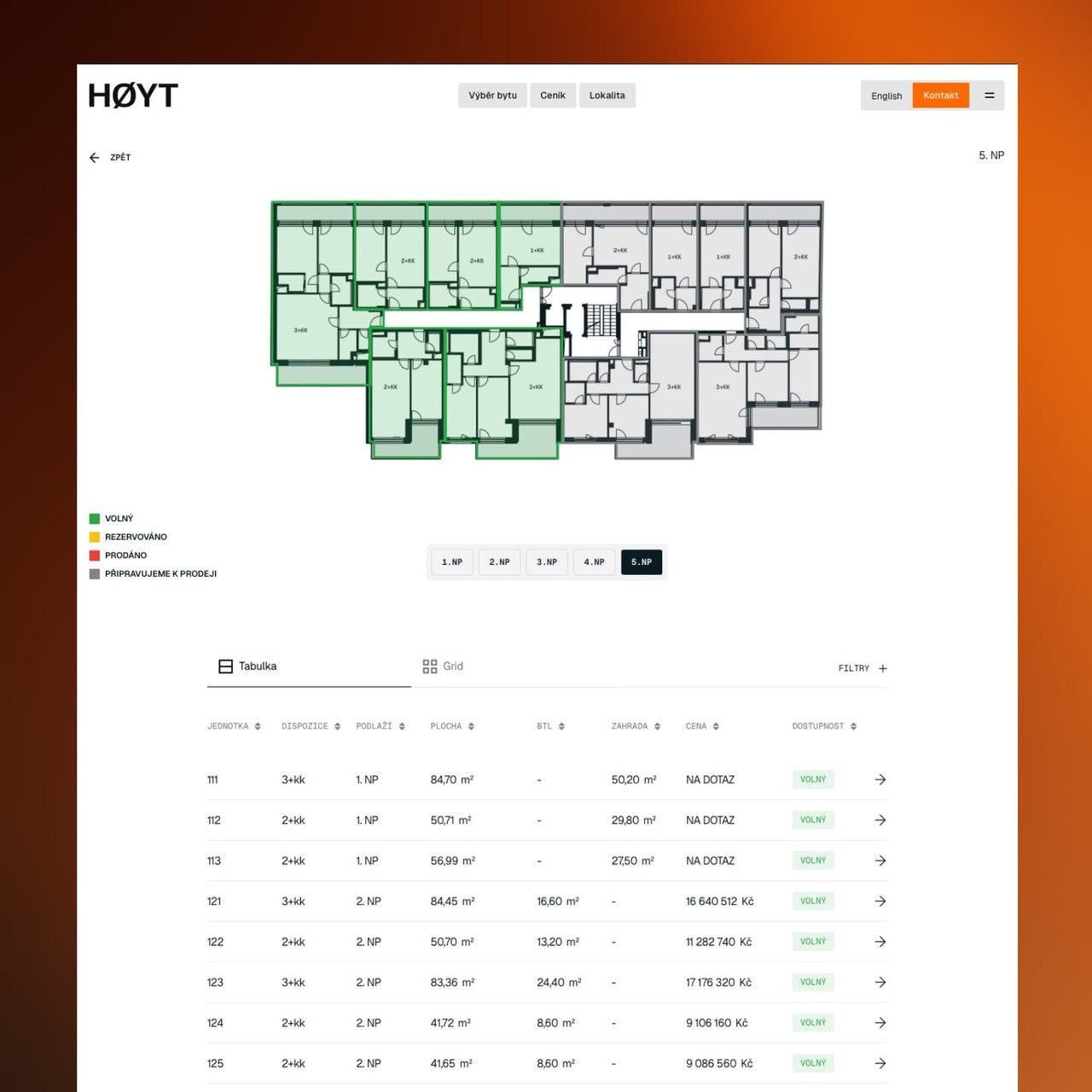
Webflow development of presentation website for HOYT residential project focused on premium housing in Prague. The aim was to create a visually strong and at the same time clear website that would promote the sale of residential units and highlight the architecture, location and technological standard of the project. Emphasis was placed on clean structure, intuitive navigation between sections (apartment selection, price list, location) and performance optimization. Part of the implementation included connection to CMS for content management and preparation of multilingual version.
HOYT
/w Olii & Made by Soulmates
Webflow development of presentation website for HOYT residential project in Prague.
- Webflow
- GSAP
- Motion Design

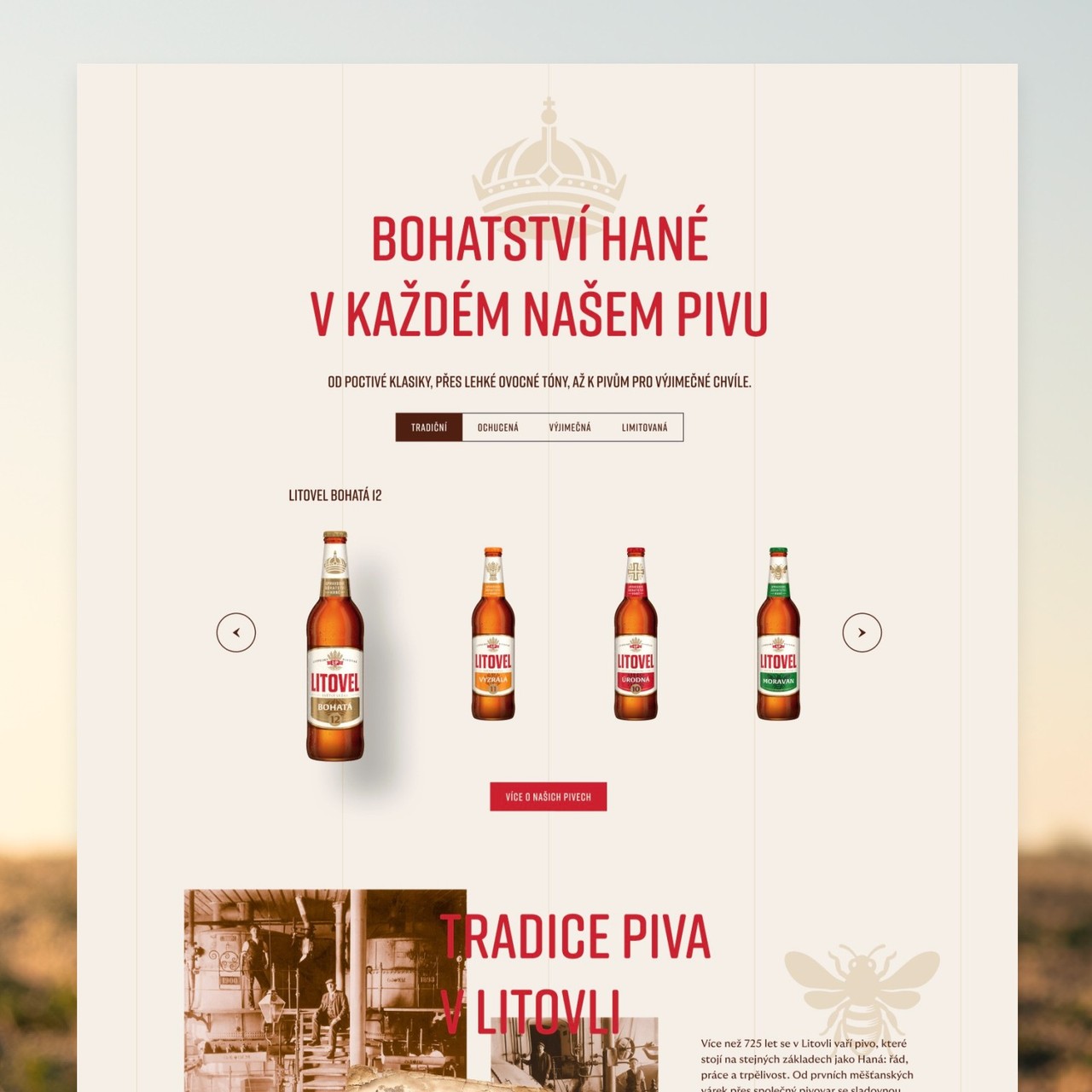
Webflow development for Litovel, a brewery that has been brewing beer in the Haná region for more than 725 years. The website builds on the brand’s bold visual identity — condensed display typography, earthy Haná tones, and historical photographs of the malt house. Interactive beer category switching, smooth GSAP transitions, and motion that underlines the craft without slowing down reading. All content is managed through Webflow CMS.
Litovel
Webflow development for a traditional Moravian brewery. Bold visuals, strong brand storytelling, and premium motion design.
Challenge
A brand with 725 years of history that has to feel current on the web, not like a museum. A broad beer portfolio split into categories, the story of the Haná region, and the brewery’s tradition. All in one place, clear and without feeling crowded.
Solution
A Webflow build driven by a bold visual identity. Condensed display typography, earthy Haná tones, and historical photographs of the malt house hold the whole site together. Interactive beer category switching with smooth GSAP transitions, and motion that supports the craft instead of breaking the reading flow. The beer portfolio and content sections run on Webflow CMS.
Result
A website that carries the brewery’s tradition while behaving like a modern brand presentation. The team adds new beers and limited editions themselves, without a developer.
Testimonials
What clients say
after launch.
I value his reliability, flexibility and great communication with the rest of the team and with clients.
 Michal PešekCEO · Simpliko
You can see in the result that he thinks about the people who will use the website, not just about how it will look.
Michal NeužilCo-founder · Persuara Jan is a professional who keeps his word, communicates brilliantly and builds world-class websites.
 Radek Šnajdrhellogrow





Got a project a template can't handle?
Tell me what you need. I'll get back with scope, a plan and a price estimate.
STATUS:OPEN FOR PROJECTS· REPLY WITHIN 2 DAYS
Comparison
Ready-made platform,
or a custom build?
Every platform has its place. I build on Webflow as a Premium Partner and help companies migrate off WordPress and Drupal. Here's when going custom makes sense.
| Criterion | WORDPRESS | DRUPAL | WEBFLOW | WIX | SQUARESPACE | FRAMER | JOOMLA | CUSTOM |
|---|---|---|---|---|---|---|---|---|
| Launch | 2–6 weeks | 1–3 months | 3–4 weeks | 1–3 weeks | 1–3 weeks | 2–4 weeks | 1–2 months | 2–3 weeks |
| Custom logic and apps | Via plugins | Yes, heavy development | Limited, via integrations | Velo, within the platform | Code injection only | React code components | Via extensions | No limits |
| Content for site, app and AI | Mostly the website | Yes, with effort | Website only | Website only | Website only | Website only | Mostly the website | One dataset, every channel |
| Editor for the team | Gutenberg + plugins | Robust, more complex | Webflow Editor | Wix Editor | Template editor | Framer canvas | Joomla admin | Custom Sanity Studio |
| Cost as you grow | Plugins and hosting | Development and hosting | Scale with the plan | Scale with the plan and apps | Scale with the plan | Scale with the plan and CMS | Extensions and hosting | Pay for what you use |
| Security and upkeep | Frequent plugin updates | Regular core updates | Handled by the platform | Handled by the platform | Handled by the platform | Handled by the platform | Core and extension updates | Static site, minimal risk |
| Performance | Depends on the theme | Good with caching | Good | Depends on the apps | Depends on the template | Good, heavier JavaScript | Depends on the template | Lighthouse 95–100 |
FAQ
What you'll want to know
before we work together.
PRICING & TIMELINES
How much does a custom website in Astro or Next.js cost?
You get a fixed price after the intro call, based on scope. A marketing site in Astro with Sanity costs less than an app with login and integrations with your systems. The biggest cost drivers are the number of page types, languages and integrations, and how much animation the site needs.
How much does a web app or client portal cost?
A web app or client portal costs more than a marketing site, because it also handles login, roles, data and connections to other systems. I price it by concrete features: how many roles, which screens, which integrations. It often pays to start with a prototype built in days and validate the scope before building the full app. You get a fixed price after the intro call and brief.
How long does a custom website take?
A typical custom website launches in 2–3 weeks. Apps with login, roles and integrations take longer, depending on scope. Code starts only after you approve the Figma design, so the timeline also depends on how quickly we agree on it. You get an exact schedule with the proposal.
What does running Sanity and hosting cost?
For a smaller site, Sanity's free plan is often enough, and it covers up to 20 users. The paid Growth plan costs $15 per user per month and suits larger teams. Hosting on Vercel requires the Pro plan for commercial sites, from $20 a month. The accounts are in your name, and you pay only for what you actually use.
How do payment and invoicing work?
I invoice as a Czech sole trader and I'm not VAT-registered, so the price in the proposal is final. The payment schedule, meaning how much is due upfront and how much at launch, is part of the proposal and agreed in advance. Ongoing work after launch is billed hourly or as a monthly retainer.
What if the scope changes mid-project?
Scope changes are normal, and I plan for them. I describe and price any new feature or page first and start only once you approve it, so the cost never catches you off guard. Small tweaks within the approved design are handled as we go. If changes pile up, we move them to a post-launch phase so the launch date holds.
TECHNOLOGY
Why Astro and Next.js instead of WordPress?
Because a site in Astro or Next.js doesn't rely on plugins that need constant updates, and its pages are prebuilt and served from a global CDN. You get a faster site, a smaller attack surface, and content you can reuse beyond the website through Sanity. WordPress has its place, and I help companies move off it. I go custom where themes and plugins start holding you back.
When does Webflow make sense, and when custom development?
Choose Webflow if you need a marketing site that you'll edit yourself after launch, page layouts included. Custom development makes sense when your content lives in more than one place, when you need custom logic, login or an app, or when the platform starts limiting you. As a Webflow Premium Partner I do both, so I'll tell you when the cheaper option is enough.
Who owns the code, content and access?
You do. I hand over the code in a Git repository, the content lives in your own Sanity project, and hosting and the domain run on your accounts. You're not locked in to me: if you ever want to, any developer who knows Astro or Next.js can take the site over.
Where does the site run and how is it secured?
The site runs on Vercel and is served from a global CDN, while Sanity hosts the content in its own cloud. Most pages are static, so there's no server-side database or plugins to attack. Sanity handles logins to the editor, with roles that control who can change what, and HTTPS comes standard.
How does the site scale as traffic grows?
A static site on a CDN scales on its own, with no intervention. Pages are served from the nearest edge location, so a traffic spike from a campaign or press coverage won't slow it down. Dynamic parts and apps run on Vercel as serverless functions that scale with load, and content comes from Sanity through its API CDN.
Can my own team take over the site later?
Yes. I build on mainstream technologies (Astro, Next.js, TypeScript and Sanity) that any modern front-end team knows. The content schema is code and lives in Git with the rest of the site, so the full change history is there. At handover, I walk your team through the project structure and deployment.
SANITY CMS
What is a headless CMS and why Sanity?
A headless CMS manages only content and leaves the look to the front end, so the same content can power your website, an app and AI tools. I choose Sanity because it stores content as structured data, and its editing environment, Sanity Studio, can be shaped around your team. It also offers editing right in the site preview, scheduled releases and real-time collaboration.
Can a non-technical team manage the content?
Yes. I build Sanity Studio for the people who will use it, not for developers. Fields are named after your content, anything you don't need is hidden, and validation flags mistakes before they reach the site. With visual editing, you click a text on the page and edit it right there. After launch, I'll show you how to manage the site.
Does Sanity handle multilingual sites?
Yes. Sanity can translate whole documents or individual fields, depending on whether language versions differ in structure or only in text. Each version gets its own URL, metadata and hreflang on the site, so search engines don't treat it as duplicate content. AI can draft the translations right inside Sanity, and your team just reviews them.
Can I preview changes before publishing?
Yes. Every change starts as a draft that you see in a live preview of the site, and it goes public only when you publish it. You can bundle several changes into one release, review it and schedule it for a set time. Clicking any text or image in the preview takes you straight to the field where it's edited.
How many people can work in Sanity at once?
Sanity's free plan covers up to 20 users, the paid Growth plan up to 50, and larger teams move to Enterprise. Editing happens in real time: you see who's in a document, and changes merge live. I can set up the Studio so sales, marketing and translators each see mainly their own content.
How are images and media managed?
You upload an image to Sanity once, and the site generates the right size and a modern format for every device. You mark the focal point in the editor, so the photo crops correctly on mobile and desktop. AI can suggest alt text for you to approve. For video, I recommend a dedicated video host so the site stays fast.
APPS & AI
Do you also build web or mobile apps?
Web apps, yes: I build client portals, dashboards, configurators and internal tools in Next.js with Sanity. I also design app UI/UX in Figma, mobile included, and the app's content can come from the same Sanity as your website. Bigger projects that need a full team, I build with Grevo, the studio I co-founded.
What AI agents and automations do you build?
I build agents and automations that take routine work off your team and work with your own content and data. Typical examples: translations and alt text in Sanity, sorting website inquiries, drafting proposals from your CRM, or an internal assistant that answers from your documentation. The agent prepares a draft, and a person approves it before anything goes out.
Can you connect the site to a CRM, ERP or accounting?
Yes. If the system has an API, I connect your site or app to it directly in code. A website inquiry can create a contact in your CRM, an order can flow into your ERP, and an invoice into your accounting software. For simpler flows, Make or Zapier automations are quicker to set up and easier to change.
Is AI connected to my data secure?
Yes, when it's designed properly: the AI gets access only to the data it needs for the task, and it publishes or changes nothing without a person's approval. I use APIs from major providers that don't train their models on API data by default. Sensitive data can be left out of AI entirely or anonymized before it's sent.
What do AI features cost to run?
AI features are billed by usage: the more text an agent processes and the more capable the model, the more it costs. Routine tasks like translation or sorting run fine on cheaper models, while complex reasoning is worth a more expensive one. I'll estimate your monthly cost from the prototype, using the real volume of your data.
SEO & AI SEARCH
Can you migrate my current site without losing rankings?
Yes. The key is that every old URL gets a 301 redirect to its new address and none ends up as a 404. I keep page titles, descriptions and article URLs where possible, and monitor Search Console after launch. A short dip after a migration is normal; lasting losses mostly come from missing redirects.
How do you prepare a site for ChatGPT, Perplexity and Google AI?
By making it easy for AI to understand and cite: every key page opens with a direct answer, the content is in clean HTML, and your details are consistent everywhere. I add structured data and llms.txt, and let AI crawlers in through robots.txt. Then we build topic clusters of articles that show your expertise. It doesn't replace classic SEO; it extends it.
What are structured data and llms.txt for?
Structured data (JSON-LD) describes in machine-readable form who you are, what you offer and what a page is about, while llms.txt gives language models a clear map of your most important content. I treat both as cheap insurance, not magic: Google doesn't require structured data for AI search and doesn't use llms.txt. Microsoft, however, says schema helps Bing and Copilot understand content.
How fast will the site be on Core Web Vitals?
I aim for a Lighthouse score of 95–100 on mobile and all three Core Web Vitals in the green. Static output, JavaScript only where it's needed, modern image formats and self-hosted fonts get it there. I measure speed before launch and keep an eye on it as the site grows.
Will I get traffic and conversion tracking?
Yes. I set up tracking around what you need to know: where visitors come from, what they read and how many send an inquiry. Depending on your needs, that's Google Analytics 4 or cookieless analytics, plus Search Console. Conversions such as form submissions or email clicks are tracked as separate events, and the cookie banner is set up to meet the rules.
How quickly do changes show up in search?
Google usually indexes new and updated pages within a few days, but ranking changes tend to show over weeks to months. I can speed up indexing by submitting the sitemap and key URLs in Search Console. AI search engines pick up changes as often as their crawlers revisit the site, which is why robots.txt has to let them in.
WORKING TOGETHER
What happens after the first call?
After the first call, I put together the scope, a plan and a fixed price, and once you agree, we start with a design in Figma. Code starts only after you approve the design. Then I build the site, test speed and accessibility, launch it and show you how to manage it. You deal with me directly the whole time, not with an account manager.
Do you work for agencies and studios too?
Yes. You design, I build: development from your designs in Astro, Next.js or Webflow, white-label under your brand if you prefer. I turn the design into code precisely and hand it over in a state anyone can pick up. I work with studios long term and on repeat projects, across websites, animation and CMS.
What happens after launch?
I stay on hand. I check that the site runs, gets indexed and returns no errors, and I fine-tune whatever real traffic reveals. You already know how to manage the site, so everyday content is in your hands. New sections, features and campaigns get added as you need them, with no agency queue.
Do you offer maintenance and further development?
Yes, in two ways: at an hourly rate, where you pay only for work actually done, or as a monthly retainer with reserved capacity. Maintenance covers dependency updates, speed and security checks and small fixes; development covers new pages, features and integrations. We'll pick what fits based on how often your site changes.
Will you sign an NDA?
Yes, I'll sign an NDA before you share the details of your project. Send me your own version, or I'll provide a simple mutual one. My access to your systems and data stays limited to what the project actually needs, and anything I no longer need is removed after handover.
How do we communicate during the project?
Directly with me, no middlemen: the person who designs and builds your site is the one answering you. Day-to-day questions go by email or a shared channel, bigger decisions on a short call. You see the design in progress in Figma and the site on a staging URL, so you always know where things stand.
Build something
that lasts.
Tell me what you're working on. Within two days I'll reply with scope, timing and a clear plan.
STATUS:OPEN FOR PROJECTS· REPLY WITHIN 2 DAYS
